
Indoor Security Cameras: How They Work For Home Monitoring And Safety

Indoor Security Cameras: Storage, Access, and Data Handling
Storage choices determine how long footage is retained and who can access it. Cloud-based retention typically provides managed backups and remote accessibility from mobile devices, but it depends on provider policies for retention windows and access controls. Local storage on microSD cards or a NAS keeps footage physically in the residence and can reduce reliance on third-party services, though it requires attention to local backups and physical security. Hybrid setups can offer a balance by storing continuous footage locally while uploading event clips to a cloud service for off-site redundancy.
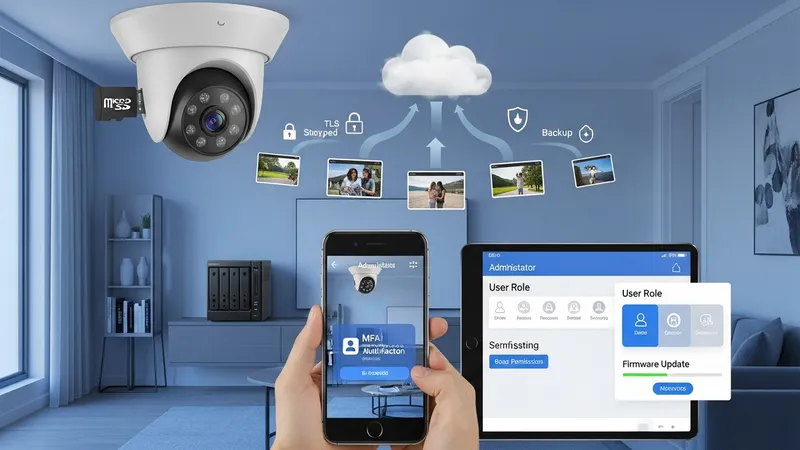
Access control and authentication are essential for protecting video streams and recordings. Systems usually allow multi-factor authentication or strong passwords, and administrators can often configure user roles to limit who can view or export footage. Secure transport protocols (such as TLS) are commonly used to encrypt data sent to cloud servers; similarly, encrypted storage on devices or servers helps limit exposure if storage media are accessed. Regular firmware updates address security vulnerabilities; therefore, a consistent update policy can reduce the risk of unauthorized access.
Data retention and privacy settings are practical considerations when managing recorded content. Many systems allow automated deletion schedules or maximum retention durations to limit stored data volume and reduce the time window of potential exposure. Privacy zones or masking features can block recording of designated areas within a camera’s field of view, which may be used to avoid capturing adjacent private spaces. Administrators may also configure whether video thumbnails or event metadata are visible to secondary users, helping to manage information exposure.
Remote access mechanisms influence convenience and security trade-offs. Peer-to-peer cloud connections simplify remote viewing by traversing NATs and firewalls, but they rely on a vendor-managed signalling service. Direct connections via port forwarding or VPN place more control under the property owner but require network configuration knowledge and ongoing management. Considerations such as expected remote usage patterns, network capabilities, and acceptable administrative overhead typically inform which access approach is preferable for a given household.