
Indoor Security Cameras: How They Work For Home Monitoring And Safety

Indoor Security Cameras: Common Types and Features
Different camera types address varying monitoring needs inside a home. Fixed-position dome or cube cameras often provide a stable, narrow-coverage view suitable for corridors or specific rooms. Pan-tilt models enable remote reorientation within a room and may include automated tracking functions, which can expand coverage without additional units. Cameras with integrated two-way audio add interpersonal communication capabilities, useful for checking on occupants or coordinating with visitors. Each type typically supports adjustable resolution and frame rates, and many offer configurable detection zones to limit alerts to areas of interest.
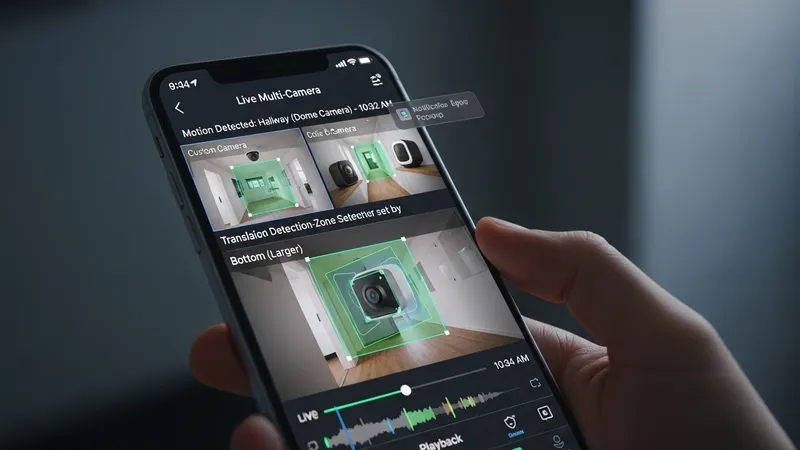
Feature sets commonly include motion detection, configurable alerts, night vision, and mobile app access. Motion detection may use simple pixel-change thresholds or more advanced scene analysis that recognises patterns to reduce false triggers. Night vision is implemented through infrared illumination or low-light sensors that can produce usable monochrome images in darkness. Mobile applications provide on-demand live view, event playback, and alert handling; they may also support multiple user accounts and cryptographic authentication. Feature firmware differences can affect how reliably these functions operate in practice.
When comparing systems, codec support and data rates matter for storage and network load. Modern devices often support H.264 or H.265 codecs to reduce file sizes while maintaining quality, although older devices may use legacy formats that increase storage demands. Frame rates influence motion smoothness and storage — common trade-offs include keeping lower continuous frame rates with short high-resolution clips on events. Power options influence installation flexibility: battery-powered units allow placement away from outlets but may impose duty cycles and charging intervals, while wired or PoE devices provide continuous operation.
Interoperability and integration with home automation platforms may be relevant depending on user needs. Some devices expose standardized APIs or support protocols such as ONVIF to allow third-party storage or centralised viewing. Integration can enable automated routines—for example, temporarily suspending recording during specific household modes—though such automation depends on secure authentication and careful configuration. Understanding these interaction patterns may inform choices about which device types and feature combinations are appropriate for a given monitoring objective.