
Car Coating: Understanding Ceramic, Wax, And Sealant Protection

Types of Car Coatings: Ceramic, Wax, and Sealant Characteristics
Ceramic-type coatings are frequently described as inorganic thin films that may chemically interact with the clear coat to form a more durable surface layer. These systems often focus on scratch resistance at a microscopic scale, UV resistance, and sustained hydrophobicity; however, their measured durability can vary by formulation and application. Polymer-based paint sealants typically use synthetic resins that form a continuous film and often emphasize gloss retention and moderate chemical resistance. Wax formulations range from natural carnauba to fully synthetic blends, typically offering immediate visual enhancement but shorter protective life compared with polymeric or ceramic approaches.
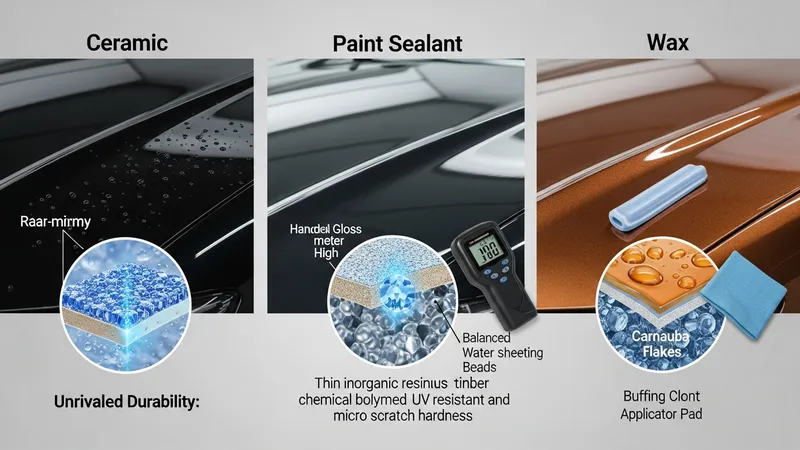
When comparing coating categories, consider typical performance attributes rather than absolute claims. Ceramic-type formulations may often produce higher static hardness readings and longer hydrophobic performance, yet they can be more sensitive to incorrect preparation and application. Paint sealants may offer a compromise of easier application and extended protection relative to wax, while waxes can be more intuitive for quick aesthetic touch-ups. These distinctions usually emerge in technical product data and independent tests, but variability among brands and techniques means outcomes may differ in practice.
Compatibility with automotive paint systems is an important consideration. Most modern vehicles have a clear coat layer designed to be compatible with surface treatments, but adhesion and visual outcome can depend on the clear coat’s condition, age, and previous treatments. Some coatings may not adhere optimally to oxidized or heavily degraded clear coat without correction. In mixed-use scenarios, such as applying wax over an existing polymer sealant, results may be temporary and will depend on the sequence and chemistry involved. Evaluating substrate condition can inform which coating type may be more suitable.
Practical considerations often influence choice among these coating types. If frequent exposure to environmental contaminants is expected, a product with greater chemical resistance and simpler maintenance may be preferable; conversely, for infrequent use and focus on immediate appearance, waxes may be acceptable. Many installers and hobbyists consider factors such as working time, required dwell time, and cure schedules when planning application. Readers may find that combining approaches in a planned maintenance regimen can align with desired appearance and upkeep effort without suggesting that any one category is universally superior.