
Car Coating: Understanding Ceramic, Wax, And Sealant Protection

Car coatings refer to surface treatments applied to a vehicle’s painted surfaces and clear coat to modify appearance and provide a layer of protection. Common categories include ceramic-type coatings that form semi-permanent inorganic layers, polymeric paint sealants that use synthetic resins, and wax-based formulations that deposit natural or synthetic oils and pigments. Each approach aims to affect properties such as gloss, hydrophobicity (water beading), resistance to light surface contaminants, and the ease of routine cleaning. Descriptions of these coatings focus on their composition, intended function, and typical application contexts.
These coatings differ in chemistry and expected lifespan. Ceramic-type coatings often contain silicon dioxide (SiO2) or similar inorganic constituents that may bond to the clear coat and form a hard, thin layer. Paint sealants are usually polymer blends that create a protective film; they can be formulated for shorter or longer persistence. Waxes, including carnauba and synthetic wax blends, typically provide immediate visual warmth and short-term protection but may require frequent reapplication. Understanding these categories helps when considering trade-offs among durability, maintenance effort, and visual effects.
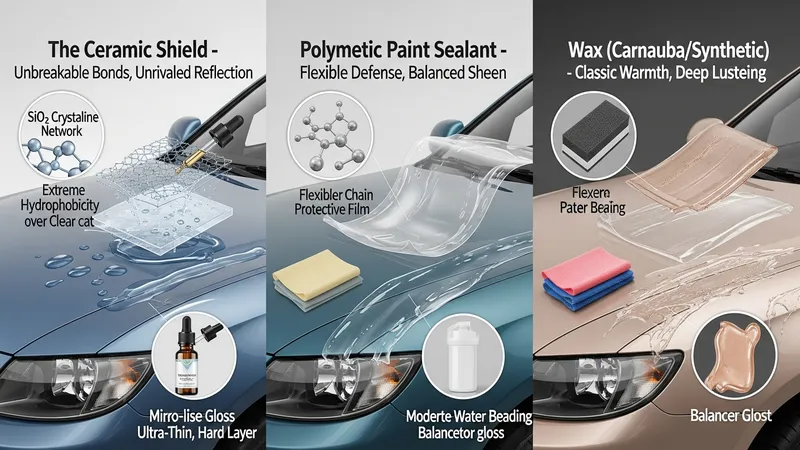
- Ceramic-type coatings — inorganic, often SiO2-based formulations that form a thin, hard layer on the clear coat; typically noted for enhanced surface hardness and extended water repellency.
- Polymeric paint sealants — synthetic resin systems that create a protective film; typically intended to increase gloss and resist light contaminants for moderate durations.
- Wax and blend treatments — natural and synthetic waxes (for example, carnauba-based or synthetic blends) that deposit oils and resins to enhance gloss and provide short-term surface protection.
Ceramic-type coatings may offer greater resistance to minor abrasive contact and environmental etching than waxes, though they typically require more careful surface preparation and controlled application conditions. Polymer sealants commonly provide a middle ground between wax and ceramic options, offering longer persistence than wax with generally simpler application than some ceramic systems. Waxes can be forgiving to apply and often enhance perceived depth of color, but they may need frequent renewal. These comparative characteristics are often cited in technical literature but can vary by formulation and application quality.
Surface preparation is frequently an important determinant of coating performance. Removing loose contaminants, correcting paint defects such as fine swirl marks, and ensuring a clean, dry substrate may increase adhesion for ceramic and polymer systems. Some formulations may bond more effectively when the clear coat is free of oxidation and residues. By contrast, wax applications may tolerate minor surface imperfections without immediate failure, though visual appearance and longevity can still be affected. Consideration of preparation steps can inform whether a do-it-yourself or professional application is more appropriate.
Application environment and technique can also affect outcomes. Temperature, humidity, and dust levels may influence how quickly solvents evaporate and how uniformly a coating cures or sets. Some ceramic-type products require controlled curing periods during which exposure to moisture or particulates is minimized; polymer sealants and waxes may be less sensitive but still perform better when applied in clean conditions. Tools such as applicator pads, microfiber cloths, and low-torque polishers are commonly used; the specific process often depends on product instructions and the degree of surface correction needed beforehand.
Maintenance strategies differ among coating types and can determine user experience over time. Ceramic coatings may reduce the frequency of intensive decontamination by limiting bond strength of certain contaminants, but they can still accumulate oils, brake dust, and road film that require appropriate decontamination methods. Waxes typically require reapplication on a monthly to seasonal cadence depending on exposure. Polymer sealants may require a maintenance wash schedule to sustain hydrophobic behavior and gloss. Maintenance choices often balance effort, appearance expectations, and local environmental exposure.
In summary, car coatings cover a range of products from wax-based treatments to polymeric sealants and ceramic-type formulations, each with distinct chemistry, application needs, and maintenance patterns. Selection considerations often include intended longevity, surface-preparation requirements, and typical environmental exposure. The next sections examine practical components and considerations in more detail.