
Work From Home Typing: How Online Typing Jobs Function And What To Expect

Task types and common workflows for work-from-home typing roles
Task types in remote typing roles often fall into categories such as verbatim transcription, edited transcription, structured data entry, and document formatting. Each category typically follows a workflow that begins with receipt of files, a preparatory review to note special elements (e.g., speaker labels, numerical data), the typing or entry phase, and a final quality check against client guidelines. Verbatim transcription may require every utterance to be recorded, while edited transcription often omits filler words and produces smoother prose; knowing which standard applies is part of initial task review.
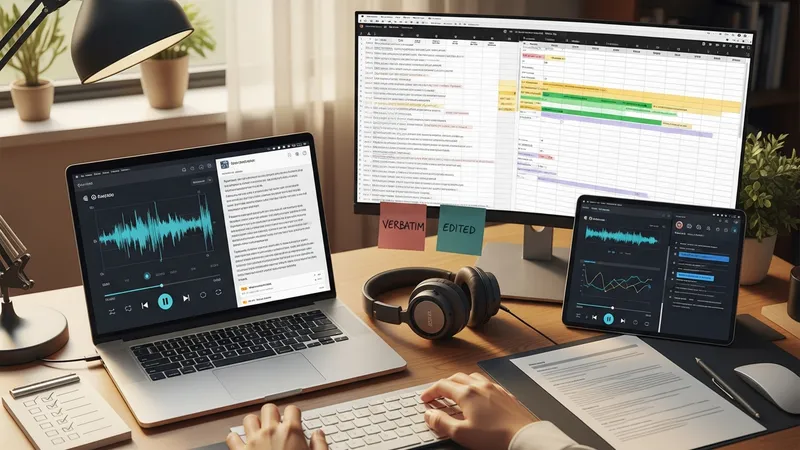
Structured data-entry workflows frequently employ templates or forms to standardize input and reduce manual errors. Workers may use spreadsheet functions like data validation, conditional formatting, and simple formulas to detect outliers before submission. For document formatting tasks, an initial template check and consistent application of headings, fonts, and margins can limit revision cycles. In many workflows, a brief metadata file accompanies deliverables to indicate word counts, time codes, or conversion notes that aid client intake processes.
Audio-based workflows often introduce additional steps such as noise reduction, speed-adjusted playback, and timestamps insertion. Some practitioners use dedicated transcription software to control audio playback and mark difficult segments for later review. For multilingual or technical content, workers may prepare a glossary of recurring terms to preserve consistency. These preparatory measures typically reduce time spent on revisions and may improve the match between the deliverable and the requester’s quality expectations.
Workflow transparency can be enhanced by simple conventions: versioned filenames, clear status indicators (e.g., draft, final), and an explicit list of elements included in the submission (word counts, time codes, applied style rules). Such conventions may reduce back-and-forth communications and make it easier to manage multiple concurrent tasks. The next section looks at scheduling and pacing considerations that affect these typical workflows.