
Pet Insurance Cost: Key Factors That Influence Monthly Premiums

Pet Characteristics and Geographic Factors That Influence Monthly Premiums
Individual pet attributes that insurers commonly consider include age, breed, sex, reproductive status, and medical history. Age often produces a predictable effect: premiums may be lower for young animals and tend to increase as a pet moves into middle and senior years due to rising incidence of chronic conditions. Breed-related risk assessment commonly reflects population-level data on inherited conditions; certain breeds may be associated with higher expected veterinary costs. Spaying or neutering status and recorded prior conditions can also be factors evaluated during underwriting or quoting.
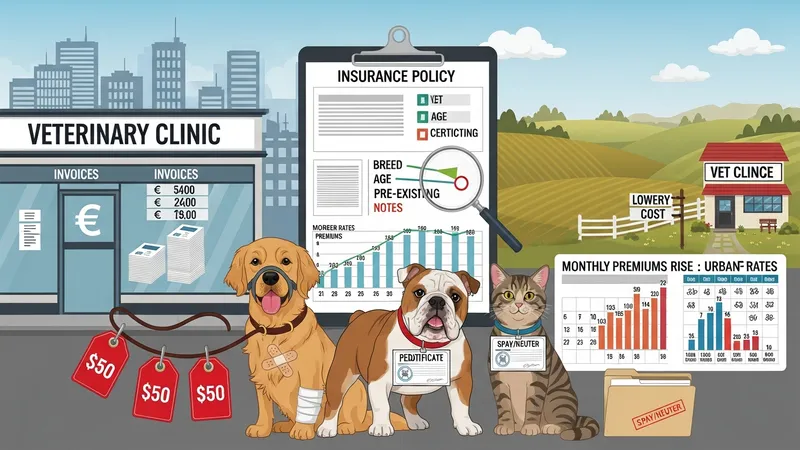
Geographic location and local veterinary cost structures may lead to regional variation in monthly pricing. Areas with higher average veterinary fees, higher cost of living, or greater prevalence of certain conditions can translate into higher insurer exposure and thus elevated premiums. For example, urban centers with more specialized veterinary services often report higher average visit costs than rural areas, which insurers may factor into regionalized pricing models. These geographic differentials are a common source of variation for otherwise similar policies.
Population density and pet demographics in a region can influence insurers’ portfolio-level risk and pricing decisions. Insurers monitor claims frequency and costs within defined territories; where claim incidence is higher, average premiums in that territory may be adjusted upward over time. Seasonal patterns or disease prevalence in particular regions—such as vector-borne illnesses in certain climates—can contribute to geographic pricing differences. Owners should recognise that location-based factors are typically one element among several in premium calculation.
Underwriting practices and available plan options often vary across markets, reflecting regulatory frameworks and competitive conditions. Some markets commonly offer multiple deductible and reimbursement tiers, while others emphasize simpler product structures. These supply-side differences can alter monthly pricing by changing how risk is pooled and priced. Understanding the interaction between pet attributes and local market structure helps explain why identical coverage names may result in different monthly payments across locations.