
Healthcare CRM: Key Features And Functions For Patient Relationship Management

Healthcare CRM: Security, Interoperability, and Practice Support Functions
Security measures in CRM implementations typically include role-based access, audit logging, encryption at rest and in transit, and secure authentication mechanisms. These controls aim to limit exposure of patient contact and communication records while providing traceability for administrative and clinical actions. Organizations often pair technical controls with policies for acceptable use, incident response, and user training to reduce the likelihood of misuse or accidental disclosure. Regular security assessments and updates are commonly part of maintenance routines.
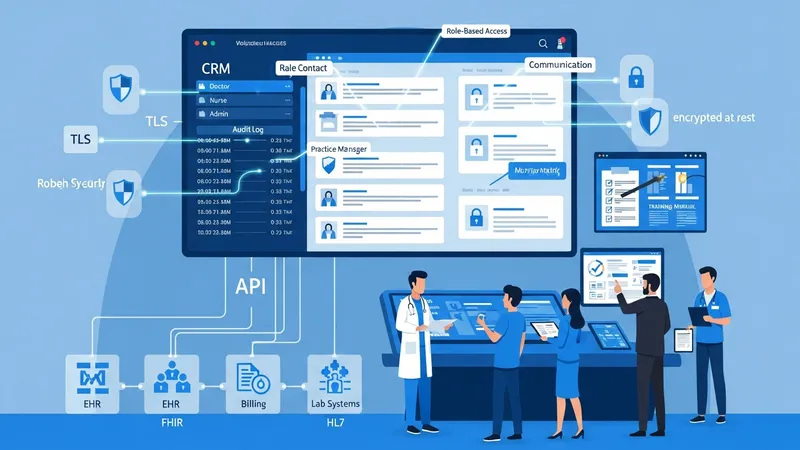
Interoperability considerations involve standardized data formats and APIs that enable CRMs to exchange information with electronic health records, billing systems, and lab services. Common technical standards used in healthcare settings include Fast Healthcare Interoperability Resources (FHIR) and HL7 messaging, which facilitate structured data exchange. Implementers frequently assess compatibility with existing systems and plan mappings for key fields to ensure continuity of patient identity, appointment records, and communication logs across platforms.
Practice support functions often integrated with CRM include referral tracking, billing-related notifications, and population outreach workflows. Referral modules may log sending and receipt events, while billing notifications coordinate with claims systems without replacing core billing platforms. Population outreach features aggregate cohorts for preventive care reminders or chronic-condition follow-up; these functions commonly rely on accurate data linkages and carefully managed consent to avoid inappropriate contact or overcommunication.
Adoption and training are practical considerations when introducing CRM capabilities. Staff proficiency with templates, task routing, and reporting features can influence how effectively a CRM supports patient relationship management. Organizations often phase implementations, gather user feedback, and refine configurations to align system behavior with clinical and administrative workflows. Ongoing evaluation of operational metrics and user experience can guide iterative improvements while maintaining focus on privacy and data governance.