
Dental Cleaning: Understanding Professional Teeth Cleaning Procedures

Common professional dental cleaning methods and clinical roles
Descriptions of common methods clarify roles and expected clinical processes during cleaning visits. Routine prophylaxis is often performed by dental hygienists and focuses on supragingival cleaning and polishing. Scaling and root planing is typically a clinician-directed procedure for deeper periodontal involvement and may be carried out in multiple visits. Ultrasonic scaling and air-polishing devices are frequently used as adjuncts to manual instrumentation to improve efficiency and access to difficult surfaces. Each method may require different appointment durations and instrumentation sets.
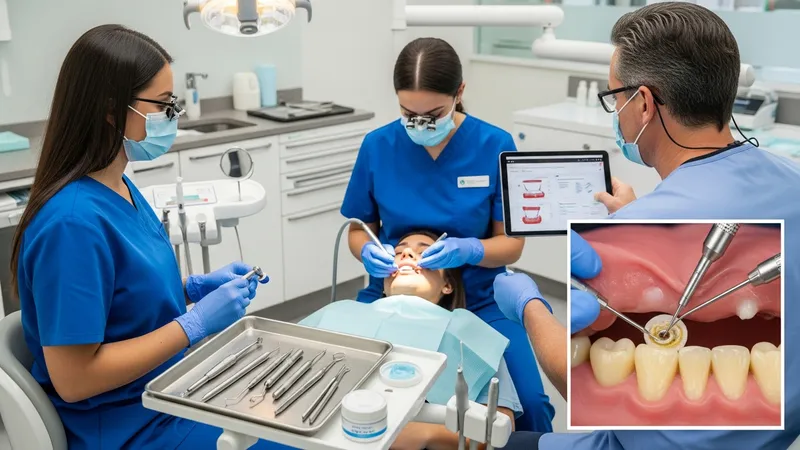
Clinical roles and delegation vary by practice setting and regional regulations, but hygienists commonly complete assessments, risk screening, plaque and calculus removal, and patient education. Dentists may perform or supervise deeper periodontal procedures, prescribe adjunctive therapies, or evaluate restorative concerns discovered during cleaning. Clear communication about roles can help patients understand the scope of each visit, the expected assessments, and any recommended follow-up or monitoring that may be appropriate.
Hygiene visits may include objective assessments that inform procedural choices. Periodontal probing, charting, and screening for oral lesions are often part of the routine examination prior to instrumentation; these measures can indicate whether a simple prophylaxis is sufficient or if additional periodontal therapy may be needed. Radiographs may be reviewed or taken when indicated to assess bone levels and interproximal calculus. Documentation of these findings typically guides the selection of cleaning method and subsequent monitoring.
Equipment and infection-control considerations factor into clinical planning. Ultrasonic devices require water and suction management to control aerosols, while hand instruments require sharpness and sterilisation. Use of protective barriers, high-volume evacuation, and standard personal protective equipment are common practices to reduce contamination risks. Understanding these operational aspects may help explain differences in appointment flow and the sequence of steps during a cleaning visit.