
AI CRM Software: Understanding Automation, Analytics, And Personalization

AI CRM Software: Automation Features and Workflow Orchestration
Automation features in AI CRM software often centralize routine actions such as lead assignment, follow-up scheduling, and ticket routing. These features may combine conditional logic with AI-originated triggers; for example, a decline in customer engagement could trigger an automated outreach sequence. Organizations commonly use test environments to simulate workflow behavior and monitor logs, since automated sequences can have cascading effects. Consideration of human override points and audit trails is typical practice so staff can intervene and review automated decisions when necessary.
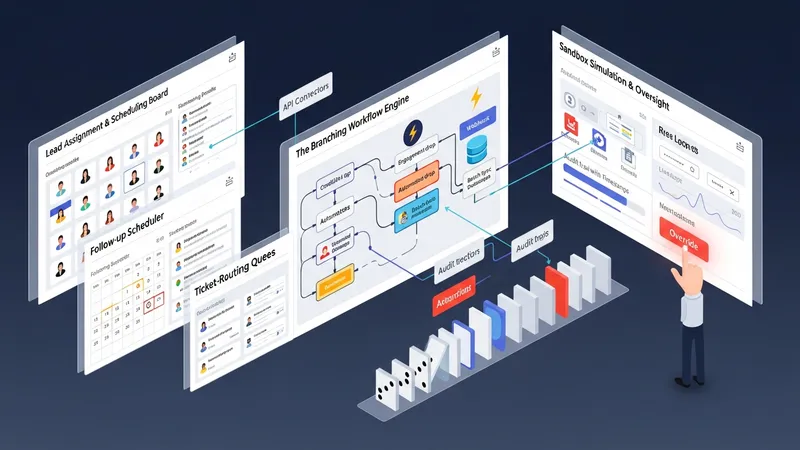
Workflows may be configured as simple two-step sequences or as complex multi-branch orchestration that integrates external systems via APIs. Integration patterns can include webhooks, queued messages, and batch data exchanges, each with operational trade-offs around latency and reliability. Teams frequently document expected state transitions for records and include error-handling pathways to manage failed automations. These design details influence responsiveness and help limit unintended state changes across customer records.
From an operational perspective, automation can reduce repetitive manual work but may also require ongoing maintenance as business conditions change. Rule engines and model parameters typically need periodic review to ensure relevance; this maintenance is often governed by change-control processes. In larger organizations, separation between those who design workflows and those who operate them can help maintain checks and balances, with analytics used to detect unusual automation patterns or performance degradation.
Technical considerations include latency tolerance, idempotency of automated actions, and scalability of the orchestration layer. Idempotency ensures that repeated triggers do not produce duplicate outcomes, which is important for reliable integrations. Scalability planning often accounts for peak volumes of events such as product launches or promotional campaigns. These factors may shape the selection of orchestration technologies and the partitioning of automation responsibilities across teams and systems.