
Accounting Practice Management Software: Key Features And Core Functions Explained

Accounting practice management — workflow and task organization
Workflow and task organization are central to practice management systems and often determine daily efficiency. Typical capabilities include templated engagement plans, dependency management, and automated status transitions. Templates may encapsulate recurring work such as monthly bookkeeping or year-end reporting, and they can often be adapted rather than rebuilt. Dependency features may prevent downstream tasks from starting until prerequisite items are complete, which can reduce rework and clarify task ownership within teams.
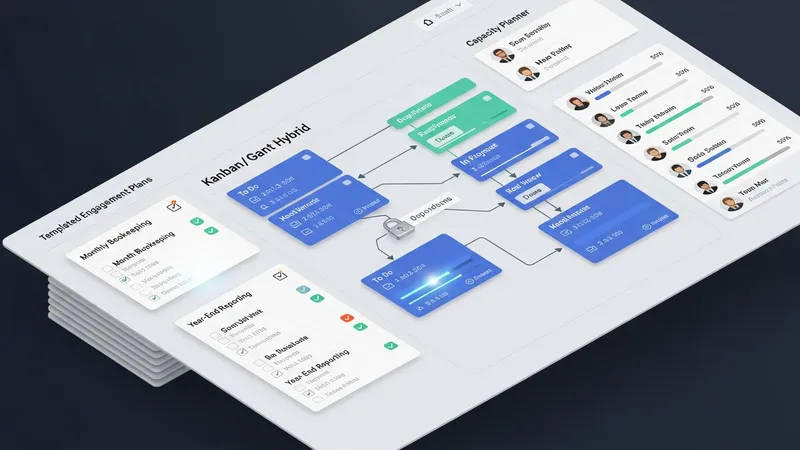
Task assignment and capacity planning features typically allow managers to view who is allocated to which engagements and to rebalance assignments as priorities shift. Time-entry integration can enable reconciliation of estimated versus actual effort and may inform future scheduling. Systems that support tags, custom fields, or categorization often allow firms to slice work by service line, client size, or complexity for more granular oversight.
Automation rules commonly reduce repetitive administrative steps and may trigger actions such as sending reminders, creating follow-up tasks, or updating client statuses. These rules often use simple conditions and can be audited to understand why certain actions occurred. Automation may sometimes introduce complexity; therefore, firms often document rule logic and periodically review active automations to ensure they still match operational needs.
When selecting or configuring task organization tools, teams often consider ease of use and the learning curve for staff. Intuitive interfaces and consistent naming conventions can support adoption. Pilot testing with representative engagements is a frequent practice so that workflow templates and automations can be adjusted before broader rollout, reducing the risk of disrupting live client work.