
Work From Home Typing: How Online Typing Jobs Function And What To Expect

Skills, equipment, quality control and expectations for work-from-home typing roles
Core skills for remote typing roles typically include accurate keyboarding, careful proofreading, and familiarity with common document formats and editing tools. Typing speed and accuracy are useful indicators of potential throughput, but attention to formatting rules, terminology consistency, and client-specific style remains equally important. Soft skills such as clear written communication for clarifying ambiguous instructions and timely status updates can also affect how smoothly workflows progress.
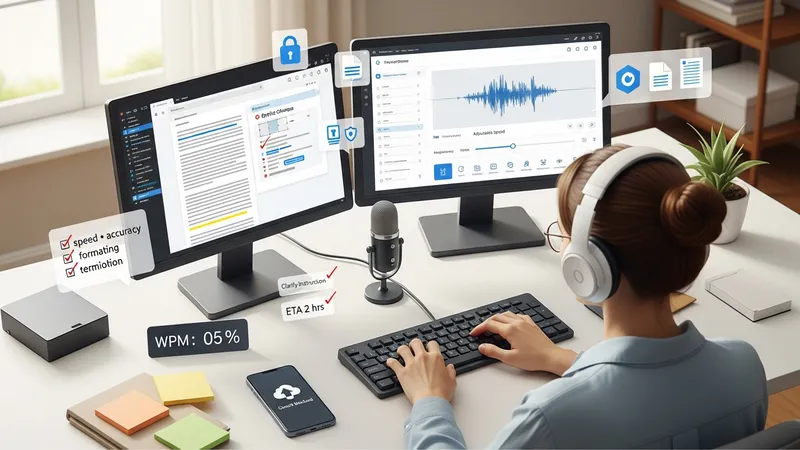
Equipment needs are generally modest: a reliable computer, up-to-date word-processing software, and a stable internet connection. For audio-focused tasks, a quality pair of headphones and a transcription player or software that supports adjustable playback speed and hotkeys may be beneficial. Using backups and cloud storage helps protect against data loss. Where sensitive data is involved, basic security measures such as encrypted transfers and password-protected files may be requested by the requester.
Quality control commonly combines self-review, automated checks, and adherence to supplied style rules. Workers often run spell-checks, scan for consistent formatting, and verify numerical entries or timestamps against source materials. Some platforms or clients employ spot checks or sample reviews; understanding typical acceptance criteria—such as allowable error rates or formatting tolerances—can reduce revisions. Continuous incremental improvement, informed by feedback, tends to raise both speed and consistency over time.
Expectations vary across task types, so obtaining clear specifications at the start is a practical step. Examples include whether transcripts should be verbatim, how to handle unintelligible audio segments, or which file formats are acceptable. Presenting a brief summary of applied conventions with each submission can clarify fulfilment of those expectations. Ongoing familiarity with tools, prudent time estimation, and attention to quality form the foundation of sustainable, transparent remote typing work.