
Self-Serve Programmatic Advertising: How The Buying Process Works

Self-Serve Programmatic Advertising: Audience Targeting and Data Signals
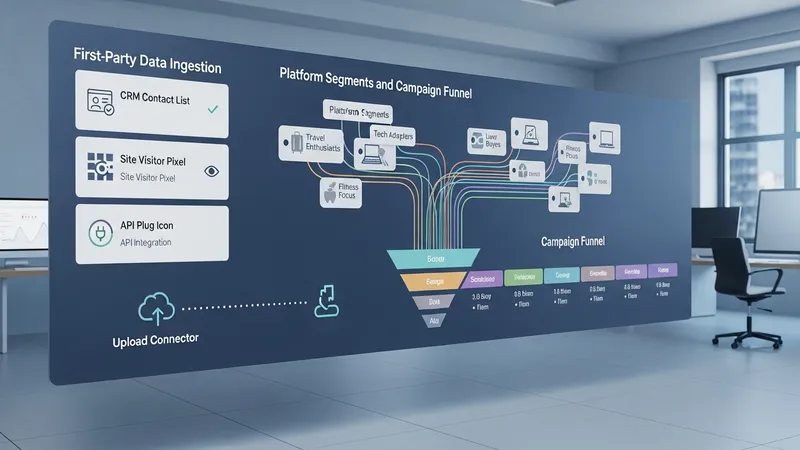
Audience targeting in self-serve programmatic systems relies on a mix of first-party data, platform-provided segments, and third-party signals where available. First-party data—such as site visitors or CRM segments—can often be uploaded or connected via APIs to focus campaigns on known users. Platform segments may include inferred interests or demographic buckets derived from observed behaviors. Privacy and consent regimes influence which signals can be used, and platforms increasingly provide alternatives like cohort-based or contextual targeting that do not rely on individual identifiers. Choice of signals typically affects scale and precision.
Contextual targeting complements audience-based approaches by aligning ads with page content or app context, and it can be effective when identity signals are constrained. Contextual signals may include taxonomy categories, keywords, sentiment, or content classifications; these can be combined with placement lists for more control. Contextual methods often provide predictable contextual relevance and may reduce dependency on personal data. When designing targeting mixes, many practitioners balance contextual and audience layers to achieve the desired trade-off between reach and relevance.
Data quality and signal freshness are practical considerations when relying on segments. Lookback windows, recency thresholds, and the size of a segment influence expected performance and attribution clarity. Small or stale segments can produce volatile results, and some platforms impose minimum segment sizes for delivery. Attribution windows and conversion delays should be aligned with business cycles so that optimization algorithms interpret signals accurately. Regular auditing of segment definitions and refresh intervals is commonly advised as a consideration rather than prescriptive instruction.
Measurement compatibility is another relevant factor: not all platforms consume the same event definitions or match rates for uploaded lists. Sync rates between identity systems and platform IDs may vary, which can affect reach estimates. Where deterministic matching is not possible, probabilistic or modeled approaches may be used, with associated uncertainty. These technical differences typically alter expectations about match rates and attribution, and they are useful considerations when comparing audience strategies across platforms.