
Pet Insurance Cost: Key Factors That Influence Monthly Premiums

Monthly premiums for covering a companion animal arise from a combination of risk assessment and policy design. Insurers estimate the probability and expected cost of future veterinary care, then allocate those expected expenses across policyholders while adding administrative load and underwriting margins. Elements such as the pet’s health profile, projected frequency of claims, and the scope of services included in a plan are typical drivers of the monthly charge. Legal or market conditions in a given region, as well as the insurer’s pricing model, can also affect how much an owner pays each month.
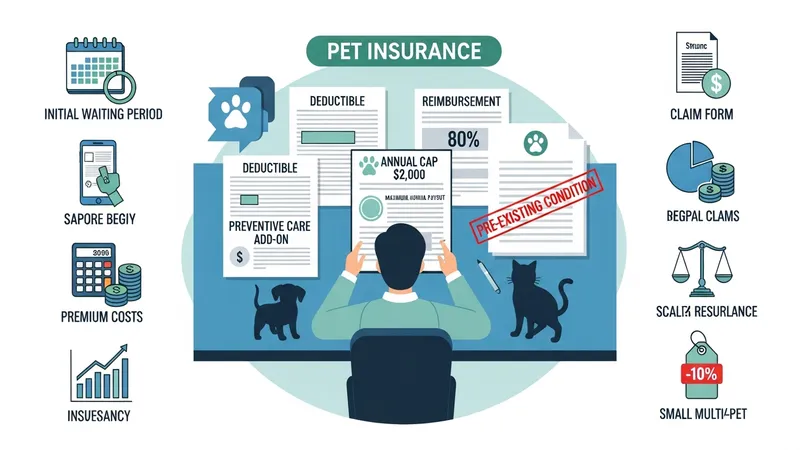
Several categories of factors commonly shape how much an owner may pay for coverage. Pet-specific variables—age, breed, sex, and pre-existing conditions—interact with policy-specific choices like reimbursement percentage, deductible type, annual or lifetime benefit caps, and optional preventive care add-ons. Operational elements such as waiting periods, claim filing processes, and multi-pet discounts tend to influence premium levels indirectly by changing expected claim behavior or administrative costs. Understanding these components helps explain differences in monthly pricing across plans and insurers.
- Accident-only plans: Coverage focused on injuries from accidents, typically excluding illnesses; these may have lower premiums and narrower benefit scopes.
- Accident-and-illness plans: Broader policies that may cover a range of injuries and diagnosed illnesses; these commonly influence higher monthly costs compared to accident-only options.
- Wellness or preventive riders: Optional add-ons that reimburse routine care such as vaccinations and check-ups; these generally add a modest amount to the monthly fee and are sold as complements rather than primary coverage.
Age and breed are often primary determinants of premium variation. Younger animals may attract lower monthly rates because they typically present fewer immediate health issues, while older pets commonly see progressive increases in premium as the expected frequency and cost of claims rise. Certain breeds are statistically more susceptible to inherited conditions; insurers may use breed-specific morbidity and mortality data to adjust pricing. Owners should note that historical health events recorded as pre-existing conditions can limit or exclude coverage and that underwriting practices around such records differ between providers.
Coverage choices such as reimbursement percentage, deductible level, and annual or lifetime benefit limits interact directly with monthly pricing. Higher reimbursement levels and lower deductibles usually correlate with higher premiums because the insurer expects to pay a larger share of each claim. Similarly, policies with unrestricted or lifetime aggregate benefits may require higher monthly contributions than time-limited or per-incident capped options. The structure of deductibles—annual versus per-incident—also changes the insurer’s exposure and therefore can affect quoted monthly costs.
Reimbursement structure and cost-sharing design can change expected out-of-pocket timing for an owner while simultaneously shaping premium amounts. Reimbursement is commonly expressed as a percentage of eligible veterinary bills after the deductible (for example, a policy may reimburse a portion of covered costs). Choosing a lower reimbursement percentage or a higher deductible may reduce monthly premiums but increase cost-sharing when care is needed. Conversely, more generous reimbursement settings typically result in higher regular payments.
Policy-related mechanics such as waiting periods, exclusions, and definitions of covered conditions play a role in premium calculation because they alter the short-term and long-term risk profile. Waiting periods reduce near-term claim likelihood, which can permit slightly lower introductory rates in some programs. Specific exclusions—for example, congenital or hereditary conditions—limit insurer exposure to high-cost items and therefore influence pricing. Administrative features like digital claims submission or in-network partnerships may yield operational efficiencies that appear modestly in premium formulations.
In summary, monthly charges for companion-animal coverage reflect an interplay among pet characteristics, the breadth and mechanics of chosen coverage, and insurer-specific underwriting practice. Individual factors such as age and breed often interact with policy design choices—deductible, reimbursement, and benefit caps—to determine a final premium. The next sections examine practical components and considerations in more detail.