
Medical Billing Software: Streamlining Claims Management And Reimbursement

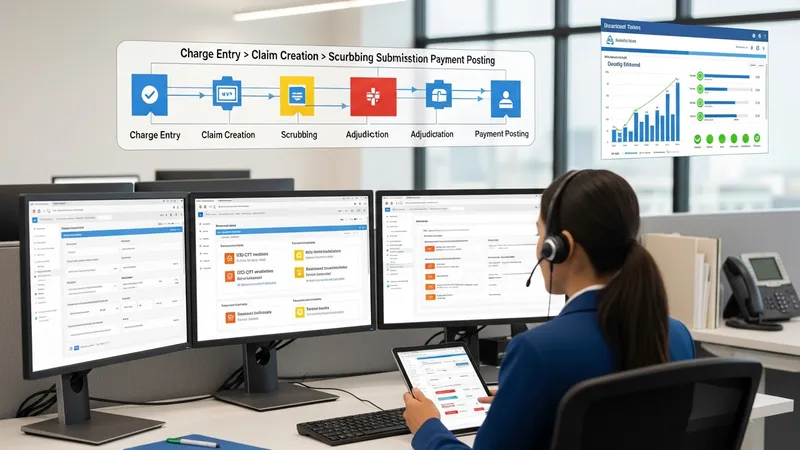
Claims workflow, automation, and error reduction
Claims workflow usually progresses from charge entry to claim creation, scrubbing, submission, adjudication, and payment posting. Automation can be applied at multiple steps, including real-time insurance eligibility checks, automated code edits, and electronic submission to clearinghouses. These automation features may reduce the need for manual corrections, but their benefit often depends on accurate source data. Systems that provide configurable edit logic and clear error messaging may help administrative staff resolve issues before submission.
Claim scrubbing functions may detect common errors such as missing modifiers, invalid code combinations, or mismatched diagnosis pointers. Some platforms may allow rules to be tailored to specialty-specific billing patterns or to common payer preferences. Automated rejection handling can flag claims for manual review, and integrated task lists may route problematic claims to staff with appropriate expertise. Over time, monitoring common edit categories can lead to targeted staff training or template adjustments that reduce repeat errors.
Transmission and acknowledgement handling are practical elements of the workflow. Systems that capture payer acknowledgements and Electronic Remittance Advice (ERA) data can reconcile submitted claims with adjudication results. Automated posting of ERAs may reduce manual reconciliation time, but exceptions typically require human review. Tracking metrics such as days in accounts receivable and claim resolution time may provide insights into which steps in the workflow contribute most to revenue cycle delays.
When planning automation, organizations often consider change management and update processes. Regular review of automated rules, periodic validation against payer guideline changes, and training for staff on how to interpret system alerts can be useful considerations. Industry guidance often suggests maintaining a balance between automation and manual oversight to ensure that unusual cases are handled accurately while routine items flow through automated paths.