
Home Attendant For Elderly: Understanding Roles, Responsibilities, And Daily Support

A home-based attendant for older adults is a caregiver who provides in-person assistance within a residence to support daily living tasks and general well-being. This role typically involves aid with activities of daily living such as bathing, dressing, toileting, and eating, as well as mobility assistance, meal preparation, reminders for routines, and basic household tasks. The attendant’s scope is often defined by a care plan or agreement and may vary according to the person’s functional needs, available family support, and local practice patterns.
Responsibilities for an in-home attendant often extend beyond practical tasks to include observation and reporting of changes in condition, coordinating with family members or professional providers, and promoting a safe environment. Training levels can vary and attendants may work alongside licensed clinicians when medical needs arise. The role is generally focused on supportive, non-prescriptive care that aims to help an older person maintain independence and comfort in their own home.
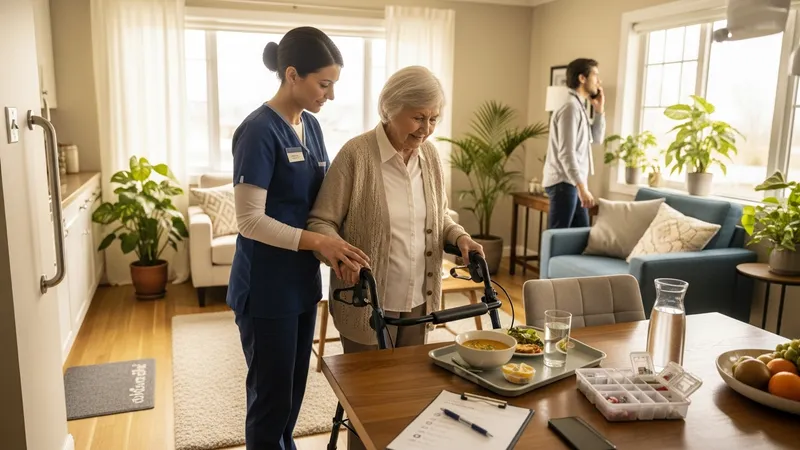
- Personal care assistance — discrete, routine help with bathing, grooming, dressing, and toileting, often guided by the care plan and the individual’s preferences.
- Mobility and transfer support — assistance with walking, use of mobility aids, chair transfers, and positioning to reduce fall risk, coordinated with therapists when needed.
- Household support and meal preparation — planning and preparing nutritious meals, light housekeeping, and organizing living spaces to promote daily functioning.
- Medication reminders and routine checks — non-clinical prompting to take prescribed medications and noting adherence patterns for family or clinicians to review.
- Companionship and social engagement — conversation, cognitive stimulation activities, and facilitation of social contacts to reduce isolation.
Training and scope of practice may differ by region and employer; attendants often receive orientation on safe handling, infection prevention, and privacy considerations. Certification requirements vary and some attendants complete formal courses in elder care fundamentals, communication skills, or first aid. In many practice settings, attendants are expected to respect personal preferences and advance directives, and to work within clearly defined boundaries, referring clinical questions or complex symptom concerns to licensed health professionals.
Clear role definitions and documentation can help prevent overlap with clinical services. Attendants may routinely record care activities, behavioral observations, and incidents for family members or supervising agencies. When a person’s needs change—such as increased mobility limitation or new medication side effects—attendants often communicate these changes to a designated contact so that care plans can be reassessed. Such communication is typically framed as observation and reporting, not clinical diagnosis.
Scheduling and coordination are common components of in-home support. Attendants may provide short visits for targeted tasks, longer shifts for continuous supervision, or regular daily support based on assessed needs. Shift patterns often reflect family preferences, available funding sources, and the complexity of care. Because many older adults prefer to remain in familiar surroundings, attendants are frequently part of broader care networks that include family, community services, and health professionals.
Safety practices are central to in-home support and often involve environmental checks, fall risk reduction measures, and appropriate use of assistive devices. Attendants can help maintain clear pathways, adequate lighting, and accessible essentials, and they may suggest simple modifications for comfort and safety. Emergency preparedness planning—such as knowing who to contact and where important documents are kept—is typically part of a comprehensive support arrangement, described as preparatory rather than prescriptive action.
Overall, the in-home attendant role blends practical assistance with observational and coordination tasks to help older people remain at home when feasible. The next sections examine practical components and considerations in more detail.