
Healthcare Learning Management Systems: Key Features For Clinical Training And Compliance

Implementation considerations and reporting tools for clinical LMS deployments
Implementation planning commonly addresses stakeholder governance, timeline, resource allocation, and pilot testing. Stakeholder governance may include clinical educators, compliance officers, IT staff, and representatives from affected departments to align expectations. Timelines often incorporate phases for requirements gathering, configuration, data migration, integration testing, and user acceptance. Pilots are frequently used to validate workflows and reporting before broader rollout, allowing teams to refine enrollment logic and assessment templates based on real-world feedback.
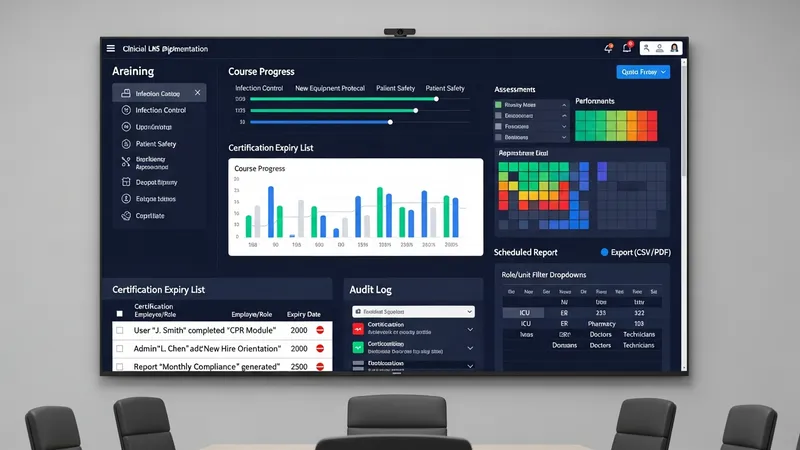
Reporting tools in clinical LMS platforms generally provide both operational and compliance-focused outputs. Operational reports may show course progress, assessment outcomes, and usage patterns, whereas compliance reports typically list required certifications, expiration dates, and audit logs. Many systems include configurable dashboards and export functions to support departmental reviews and external submissions. When selecting reporting capabilities, organizations often examine whether reports can be scheduled, filtered by role or unit, and exported in commonly used formats for downstream processing.
Integration points and technical readiness are practical considerations during implementation. Common integrations include HR systems for role and roster data, single sign-on providers, and content repositories. Technical readiness assessments often evaluate API availability, data mapping needs, and hosting preferences (cloud versus on-premises). Testing environments and staged migrations are commonly recommended to verify data flows and to ensure that role-based enrollments and permissions behave as expected under realistic conditions.
Post-implementation governance typically covers content maintenance, user support, and periodic review of compliance configurations. Content governance defines responsibilities for updating clinical materials and revising assessments when protocols change. User support structures often combine training for instructors and administrators with helpdesk procedures for learners. Periodic reviews of compliance settings and report structures are commonly scheduled to ensure alignment with evolving regulatory or accreditation expectations, recognizing that ongoing maintenance is part of sustaining reliable training and compliance records.