
Healthcare Learning Management Systems: Key Features For Clinical Training And Compliance

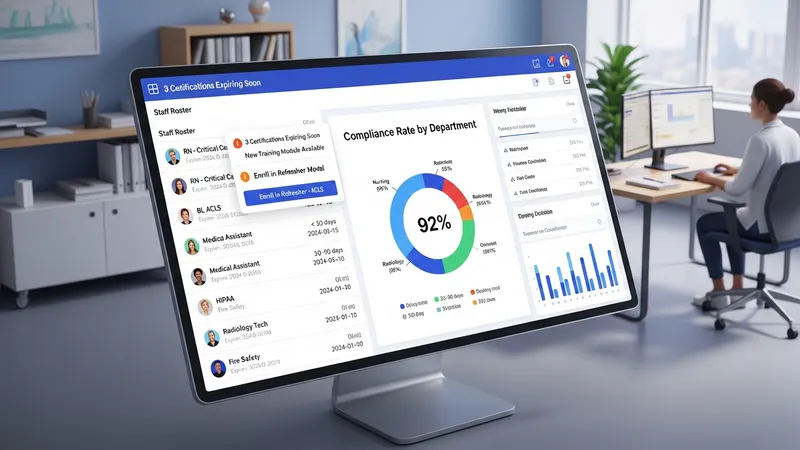
Compliance tracking and certification monitoring in clinical LMS environments
Compliance tracking features focus on documenting and maintaining evidence that required training and certifications are current. Systems generally include certification records, expiry management, and notification mechanisms to prompt renewals. Certification monitoring may link specific credentials to role requirements and produce lists of staff approaching expiration. Audit trails often retain historical records of completions, evaluator notes, and related attachments. These elements are commonly structured to support internal reviews and external audits without implying regulatory advice.
Certification workflows may incorporate automated enrollment into refresher courses and provide dashboards for compliance coordinators. Dashboards can surface overdue items, aggregate compliance rates by department, and filter by certification type. Some implementations allow exporting of compliance reports in standardized formats for external bodies or internal governance committees. When choosing reporting formats, organizations often consider how easily exported data integrates with credentialing systems or quality management platforms.
Data retention and privacy are central to compliance-related recordkeeping. Systems typically allow configurable retention periods and role-based access to sensitive records. Encryption in transit and at rest, along with secure authentication methods, are frequently recommended as baseline considerations. Organizations may also document policies for data access requests and deletion procedures, ensuring that administrative controls align with institutional and legal expectations for handling staff records.
Operational considerations for certification monitoring include processes for exception handling and evidence validation. Exception handling may cover temporary waivers, alternate competency demonstrations, or external certifications recognized in lieu of internal training. Evidence validation processes often require administrators to verify uploaded certificates or instructor confirmations. Establishing clear validation criteria and recording verification steps is a common practice to maintain consistent compliance records across staff and sites.