
Fully Funded PhD Programs: Understanding Common Funding Models And Eligibility

Fully funded PhD programs typically refer to doctoral-level study where an enrolled student receives institutional or external support that covers tuition charges and provides a regular living stipend or salary while they pursue research. Funding models vary: some are tied to work responsibilities within the university, others come as merit-based awards, and some depend on externally sponsored research grants. Understanding these models involves distinguishing the contractual duties attached to funding, the duration and renewal conditions, and the relationship between the funding source and the doctoral supervisor or department.
Funding arrangements for doctoral study can influence admissions criteria, time-to-degree expectations, and the types of research that are prioritized. Funding may be provided by academic departments, individual principal investigators, university-wide fellowships, government agencies, or private foundations. Each source can have different eligibility rules, reporting requirements, and expectations about teaching, research deliverables, or public-facing duties. Awareness of these distinctions helps applicants align their materials and timeline with funding windows and program expectations.
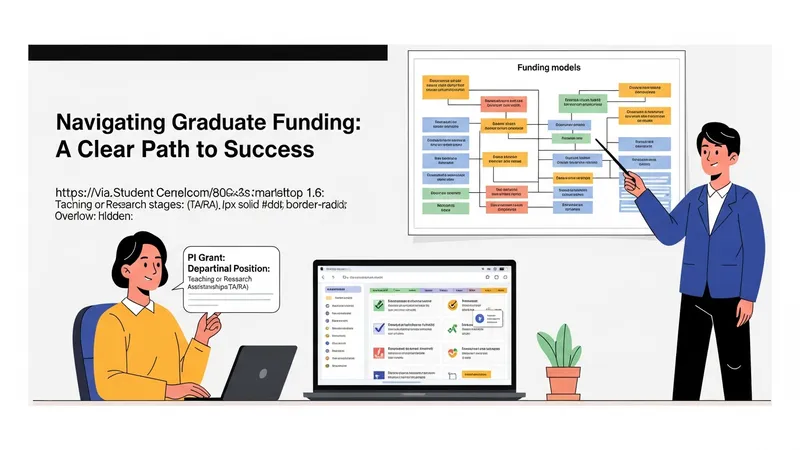
- Teaching assistantships — University-funded positions where doctoral candidates support undergraduate instruction through leading discussion sections, grading, or lab supervision. These roles typically carry a tuition waiver plus a stipend and may require a specified weekly time commitment.
- Research assistantships — Appointments funded from research grants or departmental budgets to support specific projects. Duties usually focus on research tasks aligned with a principal investigator’s grant and often include partial or full tuition coverage and a stipend tied to grant duration.
- Fellowships and scholarships — Awards that provide stipend and/or tuition remission without mandatory teaching or grant-related duties. These may be merit-based, research-specific, or linked to external funding bodies and can vary in duration and renewal criteria.
Comparing these funding pathways often involves weighing obligations against flexibility. Teaching assistantships may offer stable departmental support but include recurring instructional responsibilities that can affect research time. Research assistantships are frequently project-dependent and can be discontinued if grant funding ends; however, they can provide close mentorship with a principal investigator and direct integration into funded projects. Fellowships may give greater freedom to focus on dissertation work but are typically competitive and limited in number. Each model may influence workload distribution, expected outputs, and administrative reporting.
Eligibility requirements for funded doctoral positions commonly include academic records, prior research experience, and clear alignment between an applicant’s interests and available supervision. Programs may request a research proposal, curriculum vitae, letters of reference, and academic transcripts. Some funders specify citizenship or residency conditions, while others welcome international applicants; visa and permit regulations can affect acceptance and duration. Funding-specific eligibility can also require enrollment status, full-time registration, or satisfactory academic progress benchmarks.
Funding renewal and stability is an important practical consideration. Many assistantships and fellowships are awarded on an annual basis and may be contingent on satisfactory academic progress, deliverables, or grant renewal. Departments may offer multi-year funding packages that are conditional on milestones such as qualifying exams, timely progress toward the dissertation, or teaching performance. Understanding the typical review mechanisms and expected documentation can clarify how funding continuity may function across a doctoral timeline.
Institutional processes and timelines commonly shape how and when funding is awarded. Some universities allocate funding at the point of admission, while others distribute positions through separate departmental hiring cycles or competitive fellowship competitions. Candidates frequently benefit from early communication with potential supervisors and from aligning application timelines with known funding deadlines. The next sections examine practical components and considerations in more detail.