
ERP For Small Business: How Integrated Systems May Improve Operations

Core functional modules and coverage relevant to small-business ERP
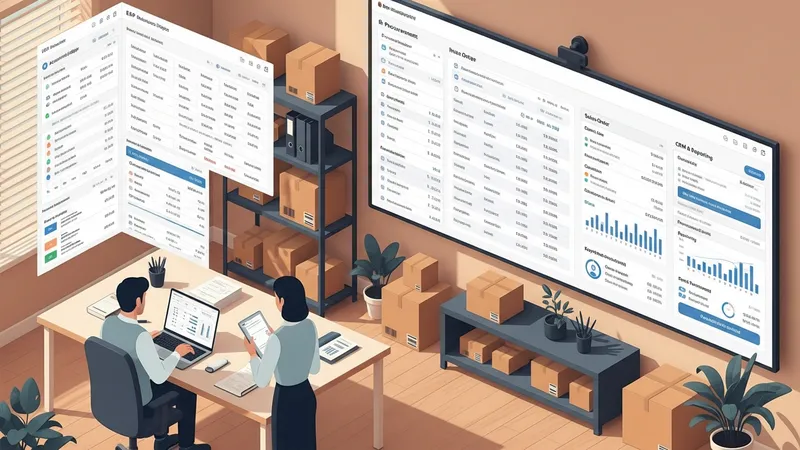
Small-business deployments often prioritize a subset of ERP capabilities that directly affect day-to-day operations. Accounting functionality commonly receives early attention because it supports statutory reporting and cash management. Inventory control covers stock levels, locations, and movement history; this module can be scaled from simple quantity tracking to support for serial numbers and batch dates. Procurement modules manage supplier information, purchase orders, and receipt processing, while sales-order modules handle quotes, orders, and customer invoicing. Choosing which modules to implement first may depend on immediate pain points such as inventory inaccuracies or delayed invoicing.
Customer management features in many integrated suites provide basic CRM records—contacts, transaction histories, and payment terms—rather than advanced marketing automation. Reporting modules aggregate transactional data and typically offer template financial statements, inventory valuation reports, and performance dashboards. For small firms, configurable report templates can be sufficient to monitor gross margins, days sales outstanding, and stock turnover without investing in separate business-intelligence tools. The degree of customization often reflects available staff expertise and how standardized existing processes already are.
Some modules include optional add-ons for industry-specific needs, such as manufacturing bill-of-materials, service scheduling, or point-of-sale integration. When selecting modules for a small enterprise, teams may consider integration depth: native modules within the same platform generally share a single dataset, while third-party add-ons may require connectors. This distinction can influence reconciliation requirements, latency of data synchronization, and ongoing maintenance effort for interfaces.
Modular design can support phased growth: firms may start with core finance and inventory and add procurement, sales automation, or basic CRM later. This approach often reduces initial training scope and limits changes to existing workflows. It may also make it easier to measure incremental improvements—such as reduced invoice processing time or fewer stockouts—before committing additional resources to further modules. The intent is typically to align system capability to immediate operational priorities rather than deploy all features at once.